
Encyclopedia of Sustainability in Higher Education: a research reference
A university can discuss sustainability extensively while its units mean different things by the term. The Encyclopedia of Sustainability in Higher Education, edited by Walter Leal Filho (2019), is worth consulting when you need to locate a question about curriculum, campus behavior or institutional policy before selecting a method.
Start reading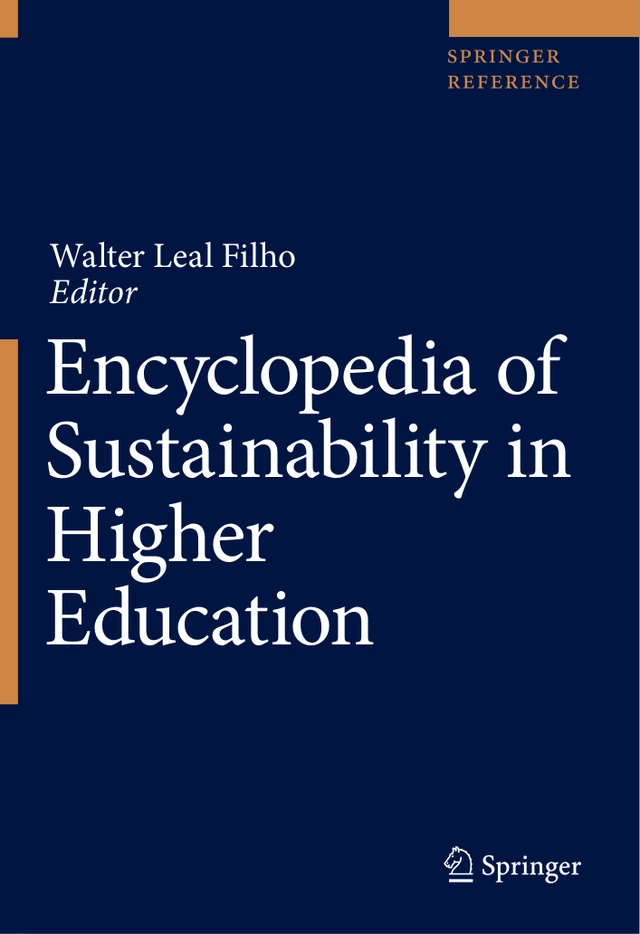
Encyclopedia of Sustainability in Higher Education
Springer · 2019 · EnglishISBN 9783030113520Original book cover; the language and edition are identified alongside it.
Use it as a map
The preface identifies areas including policy and strategy, teaching and competencies, research and transformation, and campus operations and carbon. These are different levels of action. An energy-saving project and a change in educational practice may both matter without representing the same outcome.
Individual entries have their own authors. Cite the relevant entry when using a specific argument rather than letting a reference to the entire encyclopedia obscure its source.
Narrow the question
For a broad “sustainable university” thesis, separate the organizational level, the activity and the evidence of an outcome. Only then decide what a survey can address and what requires policy documents, observation or operational records.
Illustration created by Lê Minh: a project on student waste reduction could distinguish awareness, intention, self-reported behavior and measured waste. The encyclopedia can guide conceptual reading, but relationships between those elements require appropriate evidence. An attitude score alone does not establish sustainability performance.
A manageable reading route
Write one sentence about your local problem, select related terms and read a cluster of entries. For each, record its definition, analytical level and cited research. Then rewrite the initial problem more precisely. Researchers should follow promising references back to the original studies; managers can use the same map to distinguish objectives, activities and monitoring indicators.
Audience and limits
The volume suits doctoral readers, educators and university-policy practitioners seeking a long-term reference. It is not an accreditation checklist, and the 2019 edition should be supplemented with current research. A productive outcome is a topic map and a reading list that clarify whether your project concerns education, organizations or environmental operations, rather than attempting to measure everything through one questionnaire.
Choose a companion reading
Continue with: Laws on Corporate Social Responsibility (2023 · English).
Source and edition
Leal Filho, W. (Ed.). (2019). Encyclopedia of sustainability in higher education. Springer. https://doi.org/10.1007/978-3-030-11352-0