
Roger Faligot’s Chinese Spies: reading intelligence history critically
A meeting, an intermediary or a commercial relationship acquires a different meaning when placed within a longer history of intelligence. Roger Faligot’s Chinese Spies (2019) builds its appeal through those connections. For a researcher, its additional interest is methodological: tracing how an author comes to know the events he describes.
Start reading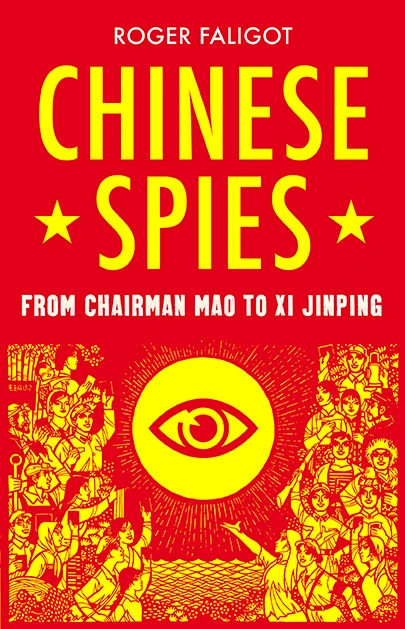
Chinese Spies
From Chairman Mao to Xi Jinping
Hurst · English editionOriginal book cover; the language and edition are identified alongside it.
Follow the historical thread
The contents move from Shanghai and the Mao era through later political leaderships, with sections on Hong Kong, economic competition and cyber operations. This chronology offers an alternative to treating decades of change as a single, timeless national characteristic. People, institutions and international relationships become parts of an unfolding account.
The narrative remains an investigative author’s interpretation. Reported testimony, allegations and independently documented events do not have the same evidential status. None warrants generalizations about Chinese people or diaspora communities.
Read the notes alongside the story
The notes and discussion of sources deserve attention rather than being left until the end. When a striking claim appears, record its cited source, date and accessibility. Ask what another reader could verify independently. That habit transfers well to business history, organizational research and media analysis.
Network sketches can also help: connect people, institutions and periods on a reading map. Such a map organizes the book’s account; it does not establish previously unknown covert relationships.
A practical route into the book
Historical readers can follow the chronology. Readers interested in economic security might begin with that theme, then return to its institutional background. In either route, consult the notes before reusing a claim.
Suggested reading exercise, created by Lê Minh: select one episode and separate the author’s assertion, the evidence cited and the remaining uncertainty. Mark inaccessible evidence as unverified. This preserves curiosity without surrendering critical distance.
Audience and edition
This is a potential choice for readers of political history and investigative reporting, rather than a quantitative-methods manual. It should be read alongside specialist scholarship when used academically. The edition introduced here is the 2019 Hurst English translation by Natasha Lehrer; distinguish it from subsequent paperback printings. Start with the introduction and an episode relevant to your interests before committing to the whole historical journey.
Source and edition
Faligot, R. (2019). Chinese spies: From Chairman Mao to Xi Jinping (N. Lehrer, Trans.). Hurst.